Northern Moldova is a region where geology and legend intertwine, a landscape of ancient hills, karst caves, and forested reserves, quite different from the wine country and monasteries further south. This is a region where nature and legend blend into a spectacular picture, offering breathtaking landscapes, ranging from millennia-old rock formations to the highest geographic point in the country.
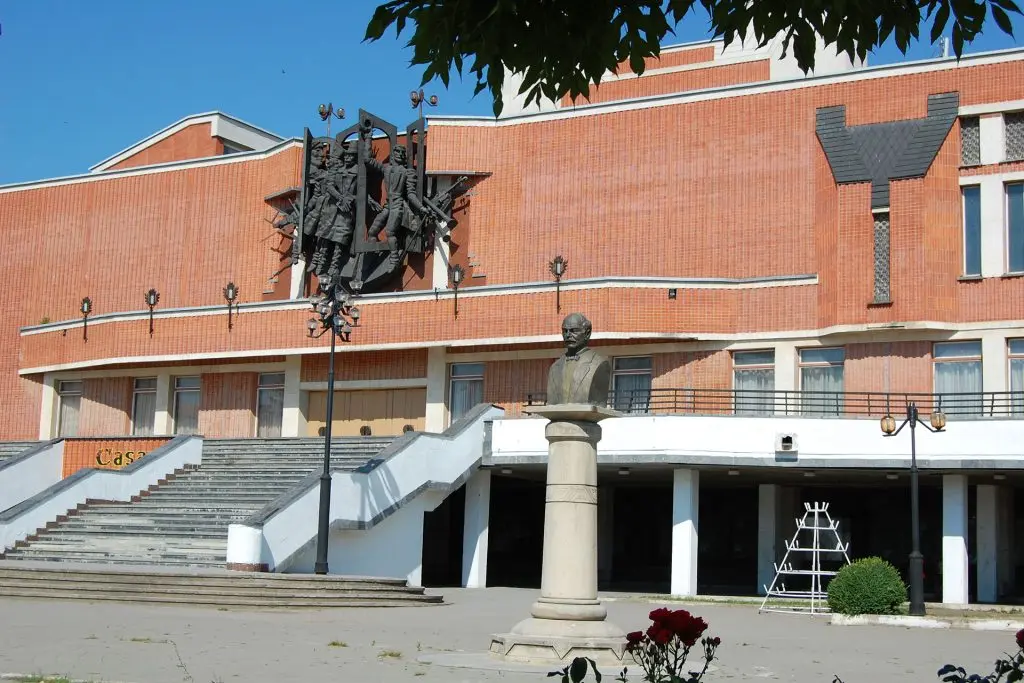
At its heart sits Bălți, the second-largest city in Moldova and unofficially known as the "Northern Capital." Its streets bring together a distinctive architectural mix, blending interwar Romanian, Soviet, and neo-Romanian styles into a single cultural "hora," a visible layering of the region's turbulent 20th-century history. Nearby, the region's identity is also tied to a much older legend: the name "Barza Albă" (White Stork) comes from a story dating back to the era of Stephen the Great, when a flock of noble storks carrying grape clusters in their beaks is said to have saved the defenders of a citadel under Tatar siege, a tale still celebrated today through the region's brandy-making tradition.
Further north, the landscape shifts dramatically. Near the village of Criva, the Emil Racoviță Cave, also known as "Zolușka" (Cinderella), is the largest cave in Moldova and the 26th-longest cave in the world, recognized as the third-longest gypsum cave on the planet. It sits at the exact point where the borders of Ukraine, Moldova, and Romania intersect, with the Moldovan-Ukrainian border running directly above the cave. Discovered in 1959 during blasting work to expand a nearby gypsum quarry, the cave remained largely unexplored for decades and today survives as a monument shaped as much by natural history as by human curiosity.
The largest cave in Moldova, occupying 51 hectares and stretching across roughly 91km of galleries and labyrinths spread over 3-4 levels, some widening into massive chambers, including the famous “Hundred-Meter Hall.” The mineral-rich lake water inside has a therapeutic effect on the body, and unexplained natural clay deposits line the walls in shades of green, blue, red, black, and white.
Naslavcea, the northernmost point of Moldova, is nicknamed the “Little Carpathians” for its hilly relief reminiscent of true mountain landscapes, with a history reaching back to the 15th century and a striking mineralogical diversity of colored clay slate and silica exposed by ancient tectonic shifts.
Near the village of Rudi, in Soroca district, stands Moldova’s only UNESCO World Heritage monument: a point of the Struve Geodetic Arc, a network of geodetic observation points stretching 2,820km from Hammerfest, Norway to Nekrasovka-Stara, Ukraine, measured by astronomer Friedrich Georg Wilhelm Struve between 1816 and 1855 to determine the exact size and shape of the Earth. The arc crosses ten countries, Norway, Sweden, Finland, Russia, Estonia, Latvia, Lithuania, Belarus, Moldova, and Ukraine, and includes 258 main triangles, 265 base points, and over 60 auxiliary points.
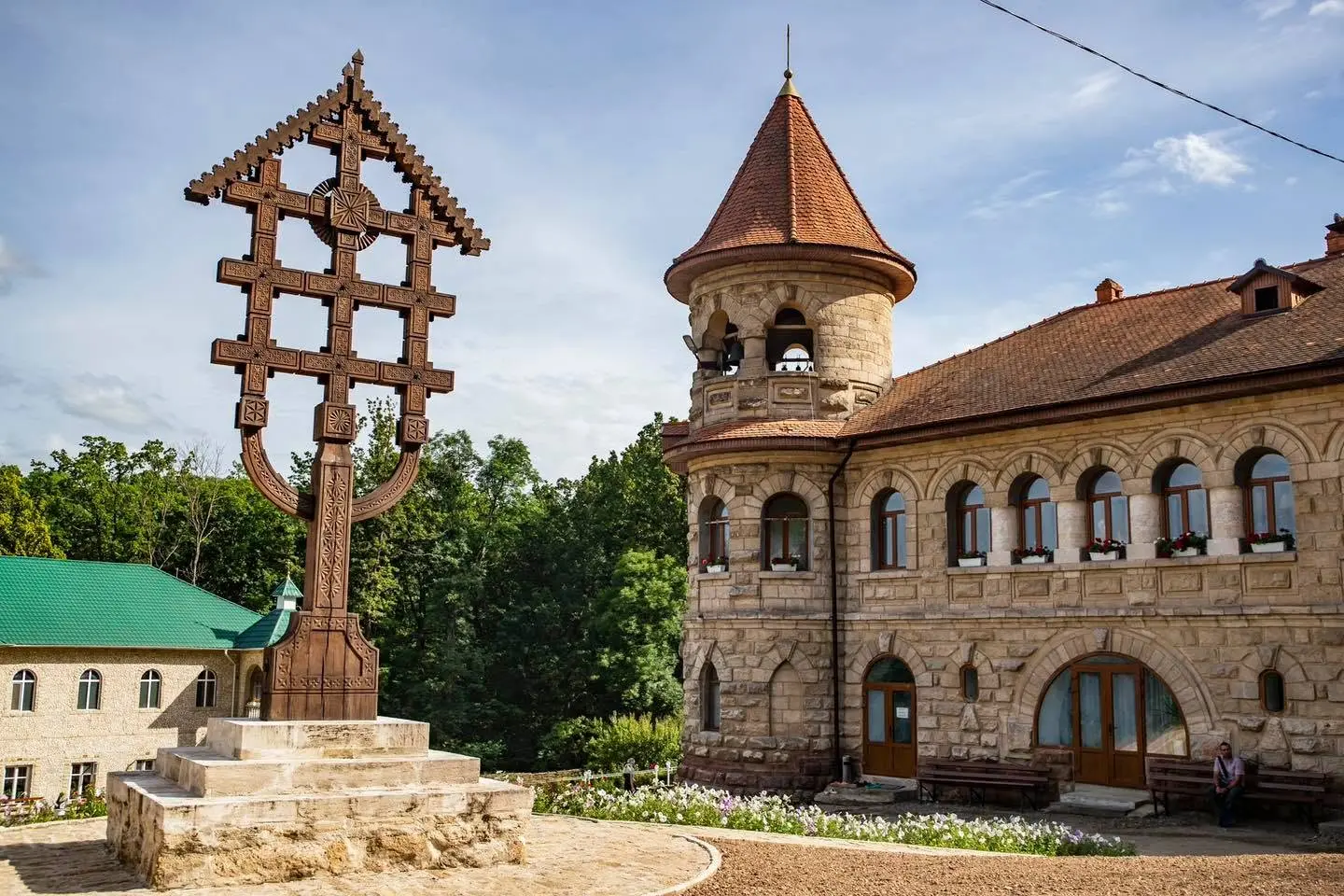
Right beside it stands Rudi Monastery, one of the oldest monasteries in northern Moldova, with its “Holy Trinity” church built in 1777, a striking example of old Moldovan ecclesiastical architecture. Together, the two sites make Rudi home to both one of Moldova’s oldest monasteries and its only UNESCO World Heritage monument, though the village remains largely undiscovered by tourists, with poor signage despite its historical significance
1
Bălți, the second-largest city in Moldova.
2
3
The Barza Albă distillery has operated in Bălți since 1944.
4
5
The region includes 102 state-protected natural areas covering roughly 16,600 hectares, along with 39 museums and hundreds of ecclesiastical monuments of national and local importance.
6
The Rudi Geodetic Point is Moldova’s only monument included on the UNESCO World Heritage List, inscribed in July 2005.
7
The full arc spans over 2,820km across 10 countries and includes 258 main triangles, 265 base points, and 60+ auxiliary points, of the 27 original points once found on Bessarabian territory, only the Rudi point survives today.
No tours were found matching your selection.
Bender, a city located on the Dniester River, boasts a rich historical background, with its 16th-century
Chisinau, the vibrant capital of Moldova, blends Soviet architecture with green parks and a lively café culture.
Tighina, a small town near the Dniester River, is known for its historical fortifications.
Transnistria is a narrow strip of land along the Dniester River.
Top Destination
Information
We use cookies on our website to provide you with the most relevant experience by remembering your preferences and repeat visits. By clicking the "Accept" button, you consent to the use of cookies. Visit Cookie Settings to learn more about the cookies we use on our website. Cookie Policy and Privacy Policy
Manage your cookie preferences below:
Essential cookies enable basic functions and are necessary for the proper function of the website.
These cookies are needed for adding comments on this website.
Google Tag Manager simplifies the management of marketing tags on your website without code changes.
Trustindex collects reviews from platforms such as Google, Facebook and Tripadvisor and displays them on a site as embedded review widgets, rating badges and social media feeds.
Service URL: www.trustindex.io (opens in a new window)
WooCommerce is a customizable eCommerce platform for building online stores using WordPress.
Statistics cookies collect information anonymously. This information helps us understand how visitors use our website.
Google Analytics is a powerful tool that tracks and analyzes website traffic for informed marketing decisions.
Service URL: policies.google.com (opens in a new window)
SourceBuster is used by WooCommerce for order attribution based on user source.
You can find more information in our Cookie Policy and Privacy Policy.